
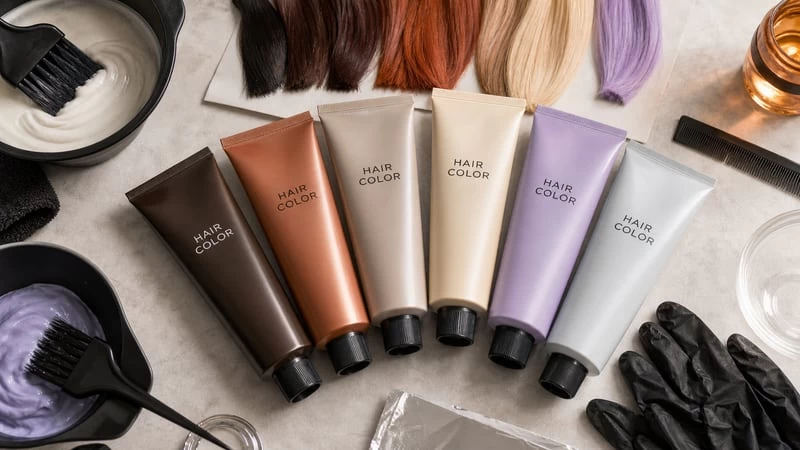
Quick answer: Private label hair dye cream sourcing requires control of the complete color system: shade target, base formula, companion components, use directions, warnings, packaging, and batch-to-batch color reference. U.S. buyers should also review the specific FDA requirements and safety directions that apply to the intended hair-dye category.
Build a shade architecture before requesting samples
Start with the market role of each shade: natural coverage, warm fashion tones, cool tones, or another clearly defined family. Reference swatches should identify the starting hair condition and the expected result under stated use conditions.
Avoid selecting shades only from screen images. Lighting, display settings, substrate, application ratio, processing conditions, and photography can all change color perception.
- Priority shade families and launch count
- Target starting hair levels and visible result
- Companion developer or other system components
- Application method and intended user setting
- Tube, kit, carton, gloves, insert, and accessory requirements
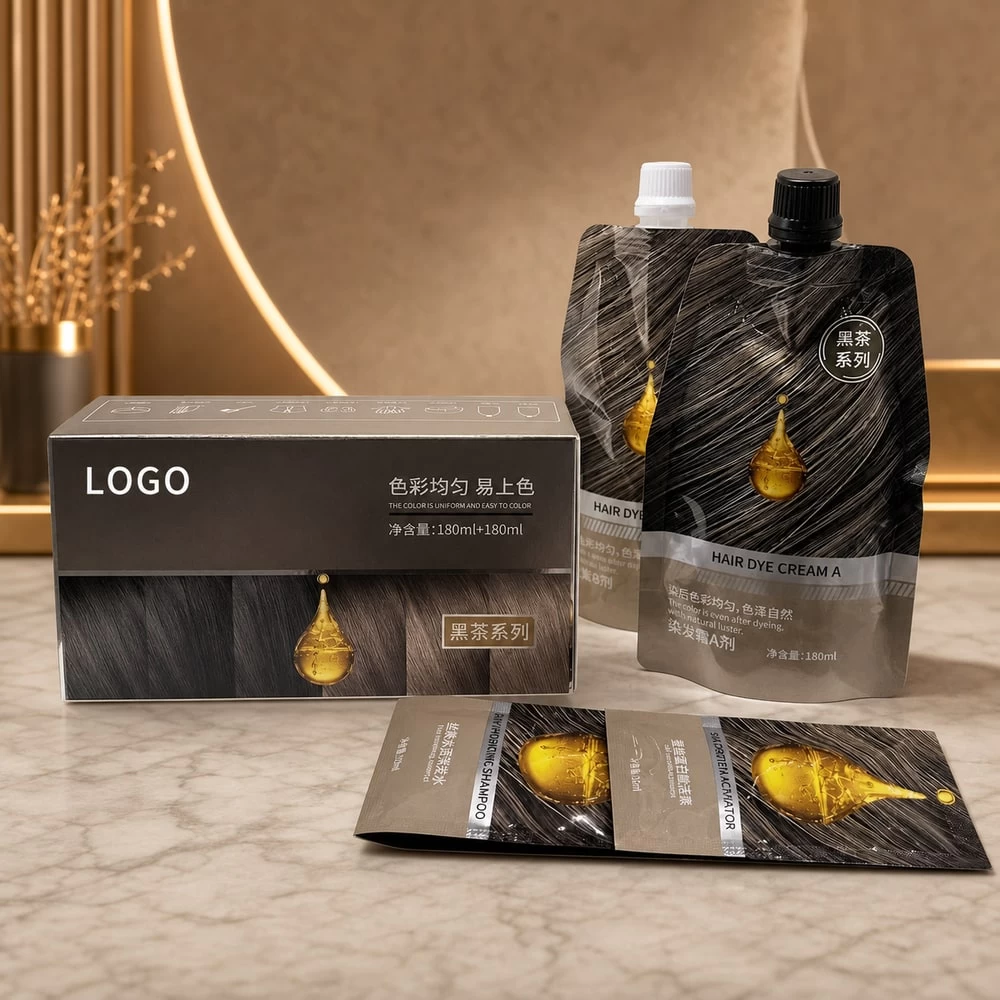
Private label hair dye cream system review
Treat the colorant, companion products, instructions, warnings, and package as one system. A change to the use ratio, processing directions, tube size, or applicator can affect both performance and the information buyers need to review.
Ask how the supplier controls shade references, raw-material lots, weighing, mixing, filling, and finished-product comparison. The commercial specification should identify what will be checked and how deviations are handled.
U.S. hair-dye safety and label review
FDA explains that certain coal-tar hair dyes have a specific statutory caution statement and should include adequate directions for a preliminary skin test. FDA also states that these products must not be used for dyeing eyelashes or eyebrows.
The exact regulatory treatment depends on the ingredients and intended use, so importers and the responsible person should review the final formula, directions, warnings, and label for the U.S. market rather than copying a generic carton.

Approval sequence for a commercial shade
- Approve the system brief and reference conditions.
- Review shade samples on agreed starting hair.
- Confirm packaging and complete use directions.
- Review warnings, ingredients, and U.S. label content.
- Approve a retained reference and commercial specification.
Buyer FAQ
Can a buyer use the same carton for every shade?
Shared design elements are possible, but shade identification, ingredients, directions, warnings, and any shade-specific information must remain accurate for the final product.
Are digital shade images enough for approval?
No. Use physical swatches or controlled application results with documented starting conditions and review lighting.
Should the tube and developer be sourced together?
If the products are intended to work as a system, evaluate them together and confirm the ratio, package sizes, directions, and compatibility.
Can a hair dye be used on eyebrows or eyelashes?
FDA states that coal-tar hair dyes are not permitted for dyeing eyebrows or eyelashes. Review the official FDA hair-dye guidance for the intended product.
What cannot be assumed in a quote?
Do not assume an exact MOQ, processing time, shelf life, certification, or test package. Ask the supplier to confirm these against the final formula and packaging.
Send a quote-ready project brief
For a hair color sourcing review, provide the shade families, reference swatches, starting hair conditions, system components, use setting, tube or kit format, estimated quantities by shade, packing needs, destination country, and target delivery window.