
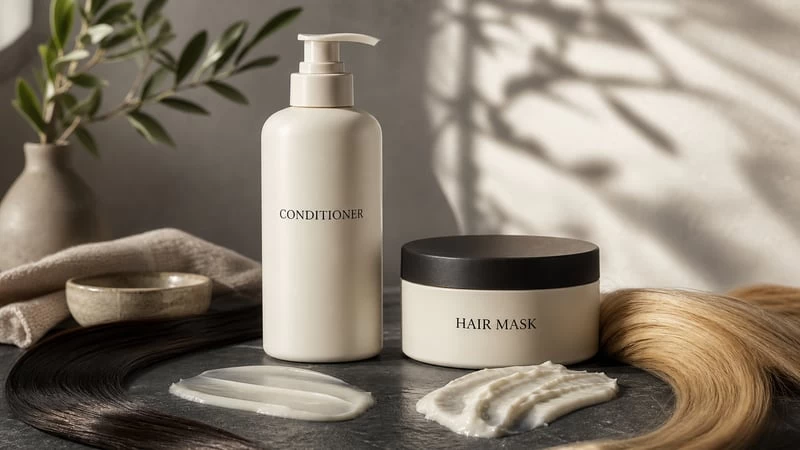
Quick answer: Choose between conditioner and hair mask by deciding the product’s role in the routine, expected use frequency, sensory profile, packaging, and price architecture. The names are not interchangeable: buyers should brief the intended consumer experience and commercial format instead of assuming one fixed technical definition.
Define the assortment role first
A conditioner usually supports frequent post-shampoo use and a fast, predictable rinse experience. A hair mask is commonly positioned as a more deliberate treatment step, often with a richer texture, longer use time, or less frequent application.
Those are market conventions rather than universal formula rules. The final choice should be based on the product brief, directions, package, and consumer expectation.
| Decision point | Conditioner direction | Hair mask direction |
|---|---|---|
| Routine role | Frequent maintenance step | Periodic treatment step |
| Typical package | Bottle, pump, or tube | Jar or wide-mouth tube |
| Use experience | Easy distribution and rinse | Richer application ritual |
| Line architecture | Core shampoo companion | Premium or targeted extension |
Compare the complete product, not only texture
A thick product is not automatically a mask, and a lighter product is not automatically a conditioner. Evaluate slip, distribution, wet-hair feel, rinse behavior, after-feel, fragrance release, and compatibility with the intended container.
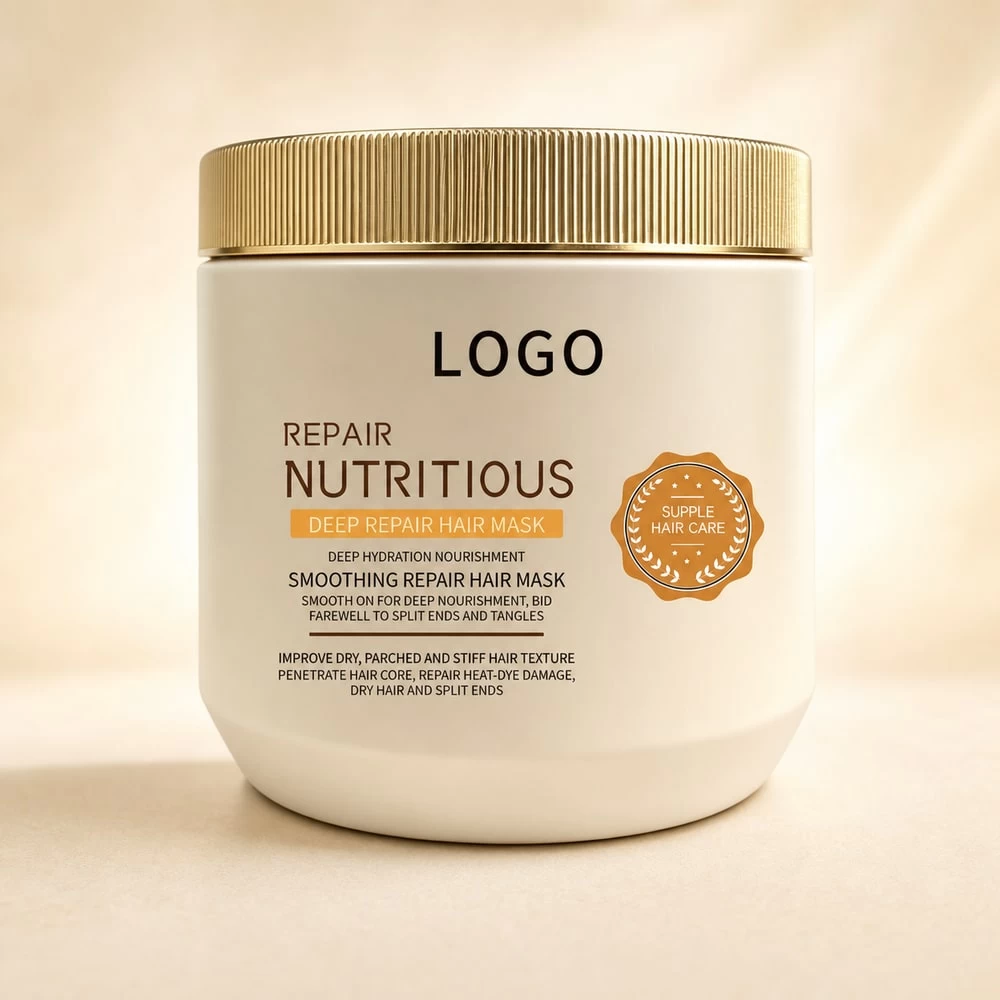
Jar products introduce different hygiene and shipping considerations than pump bottles. Ask the supplier to evaluate fill behavior, leakage, closure torque, liner needs, and label adhesion for the chosen pack.
Build a sample test that matches real use
- Select representative hair tresses or panel users for the target hair profile.
- Use the same amount, timing, water conditions, and comparison method.
- Score application, detangling, rinse, wet feel, dry feel, and fragrance.
- Test the formula from the proposed package, not only a laboratory jar.
- Keep an approved reference sample for commercial-batch comparison.

Avoid line overlap and unclear claims
If both products promise the same result with similar directions and textures, buyers may not understand why the line contains both. Give each SKU a distinct use moment, package cue, and claim hierarchy without stretching the evidence.
Do not rely on words such as repair or strengthening without reviewing what the formula and available substantiation support. Confirm final claim wording for the target market.
Buyer FAQ
Can the same base formula become both products?
A supplier may be able to adapt a base, but the target texture, use directions, package, and performance expectations should be reviewed separately.
Is a jar required for a hair mask?
No. Jars are common, but a tube or pump may be more suitable for hygiene, shipping, or use convenience if the formula can dispense correctly.
Should conditioner and mask use the same fragrance?
They can share a fragrance for line consistency, or use different profiles to signal distinct roles. Confirm stability and the sensory effect in each formula.
How should buyers compare samples?
Use a written scorecard and controlled application method. Compare against the brief and a retained reference, not memory alone.
What belongs in the RFQ?
Include hair profile, product role, texture and rinse targets, package, fill size, decoration, estimated quantity, destination, and desired documentation.
Send a quote-ready project brief
To evaluate a conditioner or hair mask program, send the target hair profile, routine role, texture and rinse expectations, formula exclusions, container type, fill size, decoration, order range, packing request, destination country, and delivery target.