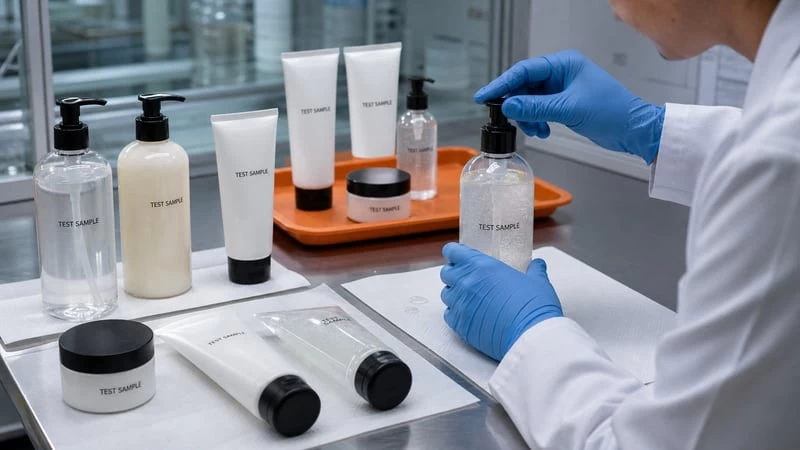
Quick answer: Cosmetic packaging compatibility testing checks whether the final formula, container, closure, label, decoration, and shipping configuration continue to function together under defined conditions. Testing an empty bottle or formula in a laboratory jar cannot answer the same commercial questions.
Test the complete pack
Use the production-intent formula and components whenever possible. Include the bottle or jar, pump or cap, liner, tube, label, ink or coating, secondary carton, and any seal that can contact the product or affect package function.
Record component suppliers and versions. A visually similar pump or resin can behave differently, so substitutions should trigger review.
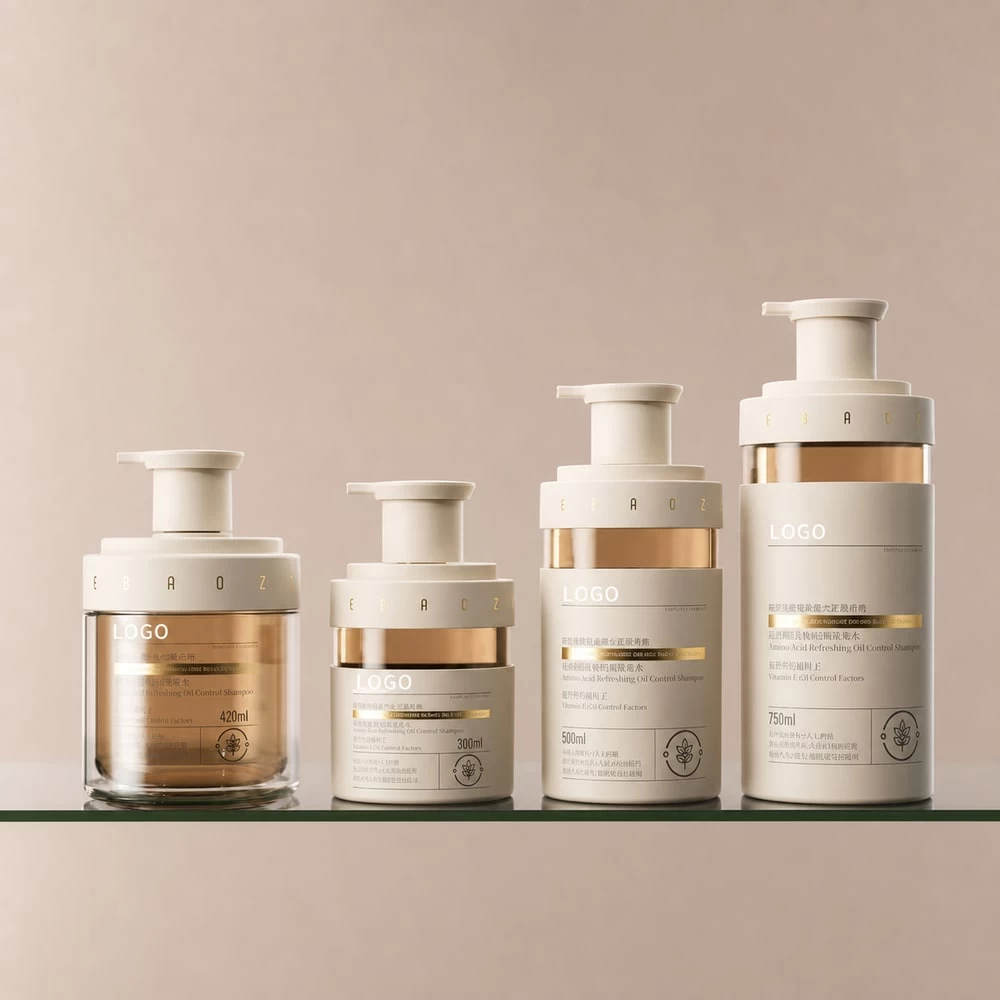
Cosmetic packaging compatibility testing observations
| Area | Visible or functional checks | Buyer question |
|---|---|---|
| Container | Distortion, stress, discoloration, paneling | Does the pack remain stable and presentable? |
| Closure | Leakage, torque, loosening, liner behavior | Does it remain sealed through use and transport? |
| Dispensing | Prime, dose, clogging, drips, residue | Can consumers use the product as directed? |
| Decoration | Adhesion, lifting, rubbing, staining | Does the finished pack remain readable and intact? |
Define conditions before starting
The protocol should state sample count, fill method, orientations, storage conditions, observation schedule, acceptance criteria, and responsibilities. Include distribution risks relevant to the project, such as vibration, compression, and temperature exposure, without claiming one universal test plan.
Confirm whether the supplier, component vendor, buyer, or outside laboratory owns each part of the work. Ask for the resulting records and a process for deviations.

Changes that require review
- Formula, fragrance, color, or viscosity change
- Bottle resin, wall thickness, mold, or supplier change
- Pump, cap, liner, seal, or tube laminate change
- Label stock, adhesive, ink, coating, or decoration change
- Fill volume, headspace, carton, or shipping configuration change
Buyer FAQ
Can an empty package test prove compatibility?
No. Empty-pack checks can evaluate dimensions or mechanics, but product contact and filled-pack behavior require the final or representative formula.
Who decides the test duration?
The parties should define a protocol based on the product, package, distribution, and intended shelf-life support. Do not assume one standard duration.
Does a passed pump test cover every viscosity?
No. Dispensing behavior can change with formula flow, temperature, particle content, and closure design.
What if a component supplier changes?
Evaluate whether the change affects material, geometry, process, decoration, or function, and repeat appropriate checks.
Should test records be part of the purchase file?
Yes. Keep the protocol, component identities, observations, deviations, decisions, and approvals linked to the final specification.
Send a quote-ready project brief
To plan a compatibility review, submit the product formula version, package components and suppliers, fill volume, decoration, intended storage and shipping conditions, estimated quantity, destination country, acceptance concerns, and target production timing.